GTA Vice City (2002): The Complete History of the Game That Changed Everything
October 2002. I Was 14, and the World Just Changed.
Technically, I wasn’t supposed to be playing it. The game was rated M and my mom would have had a heart attack if she’d seen what was happening on screen. But it was 2002. Parental controls weren’t really a thing, and my buddy’s older brother was cool. So we sat down in front of his 20-inch CRT TV, he fired up the PS2, and the opening chords of “Billie Jean” blasted through the speakers.
Vice City. Even the name felt like a promise.
Twenty-three years later, with GTA 6 taking us back to that city, it’s time to explain why this 2002 game changed gaming. Not a little. Completely.
Tommy Vercetti, GTA’s First Real Character
Before Vice City, GTA protagonists were empty shells. Claude, the hero of GTA III, literally didn’t speak. Not a single word in the entire game. It was intentional, sure, but it limited the emotional connection.
Then Tommy Vercetti arrived. Voiced by Ray Liotta — yes, the Ray Liotta from Goodfellas. This guy gets out of prison, shows up in Vice City for a deal that goes sideways, and decides he’s going to take over the entire city. Not because he has to. Because he wants to.
Tommy was arrogant, violent, funny, and ruthless. But most importantly, he had a personality. Memorable lines. A character arc. For the first time in GTA, you weren’t just playing an avatar — you were playing a character. And that changed everything that followed.
The Soundtrack. GOOD LORD, the Soundtrack.
We have to talk about it. Because if one single element of Vice City deserves to live forever in collective memory, it’s the music.
Rockstar didn’t just throw some 80s songs into the game. They created the soundtrack of the 1980s. Seven radio stations, each with a distinct personality. Flash FM played Michael Jackson, Hall & Oates, Laura Branigan. V-Rock blasted Motley Crue, Judas Priest, Ozzy. Emotion 98.3 made you weep with Foreigner and Cutting Crew. And Wave 103 introduced you to new wave with Blondie and Frankie Goes to Hollywood.
This wasn’t just in-game radio. This was music education. Fourteen-year-old kids (yes, me) discovered Flock of Seagulls because of a carjacking game. It’s absurd and beautiful at the same time. I know people who still listen to “I Ran” solely because Vice City burned it into their brains forever.
And VCPR, the talk radio station. With its completely unhinged hosts and deranged callers. Peak Rockstar humor. Lazlow was already there, by the way. Before it became a franchise tradition.
An Open World Ahead of Its Time
You have to remember the context of 2002. Open worlds barely existed. GTA III had laid the foundation a year earlier, and that was already revolutionary. Vice City took those foundations and elevated them.
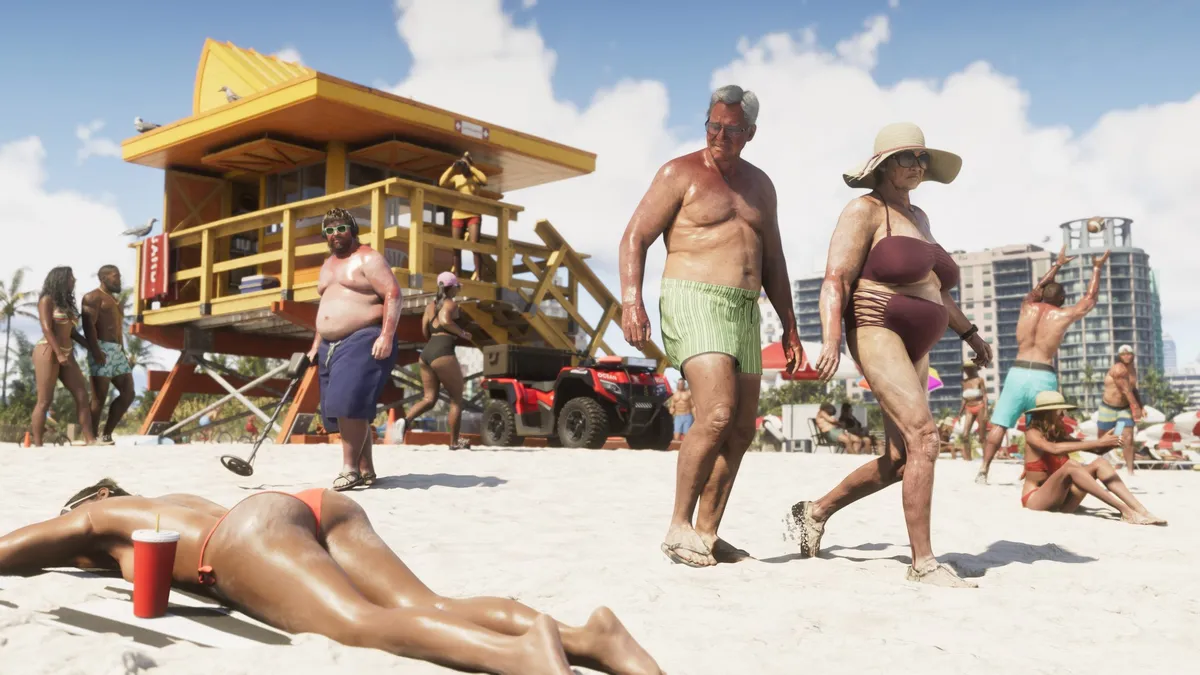
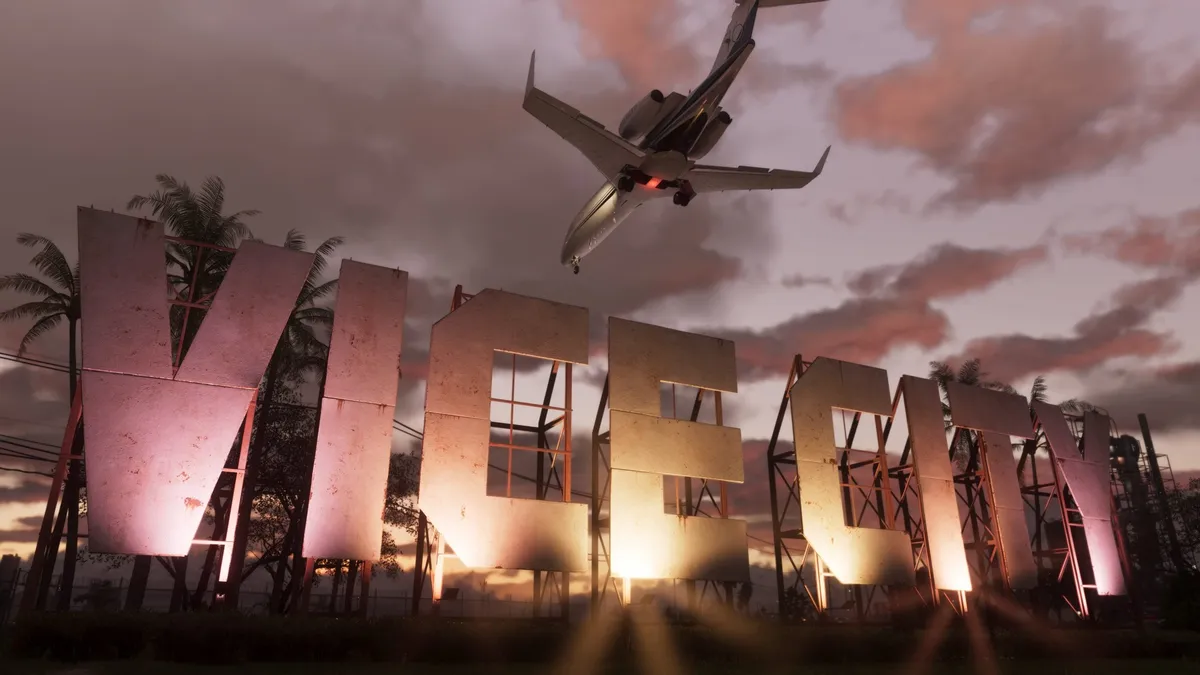
The city breathed the 1980s. The Art Deco buildings of Ocean Beach. The palm trees. The pink and purple sunsets (as much as the PS2 could manage, anyway). The white suits. The pastel-colored cars. Everything was cohesive. Everything told a story.
And for the first time, an open world had a real cultural identity. Vice City wasn’t just a 3D city. It was a love letter to Scarface, Miami Vice, and Carlito’s Way. A concentrated dose of 80s pop culture filtered through Rockstar’s signature caustic humor. No game had done that before. Very few have done it as well since.
The Innovations We’ve Forgotten
We take them for granted now, but in 2002, these were groundbreaking:
Buying properties. Vice City was the first GTA where you could become a property owner. The Malibu Club, the film studio, the ice cream shop (which was a front for drugs, obviously). Each property generated income and unlocked missions. It was embryonic compared to what exists today, but the concept of building a criminal empire in an open world? That started right here.
Motorcycles. It sounds ridiculous to say, but GTA III had no motorcycles. Vice City introduced them, and ripping down the waterfront on a PCJ 600 with “Out of Touch” by Hall & Oates blaring in your ears was one of gaming’s purest pleasures.
Accessible helicopters. The Sparrow and the Hunter (the attack helicopter) offered a completely new perspective on the map. Flying over Vice City at night, with the neons below… a decade before drones existed, Rockstar gave you that feeling.
Mission variety. Bank heist, boat race, drug deal, action movie to film for a studio, pizza delivery. The variety was wild for its era. Some missions were infuriatingly difficult (the remote-controlled helicopter mission — if you know, you know), but you were never bored.
Cultural Impact: More Than a Game
Vice City transcended gaming. It became a cultural phenomenon. It reignited 80s nostalgia. It popularized synthwave before synthwave had a name. It inspired films, TV shows, and music videos. When Drive came out in 2011 with Ryan Gosling in a satin jacket cruising through nocturnal, neon-lit streets, nobody could help but think of Vice City.
The game also triggered massive controversies. Jack Thompson, the American lawyer, made it his personal crusade. Mainstream media screamed scandal. And meanwhile, it sold 17.5 million copies. Controversy, Rockstar understood before anyone else, is free advertising.
From Tommy to Lucia: Full Circle
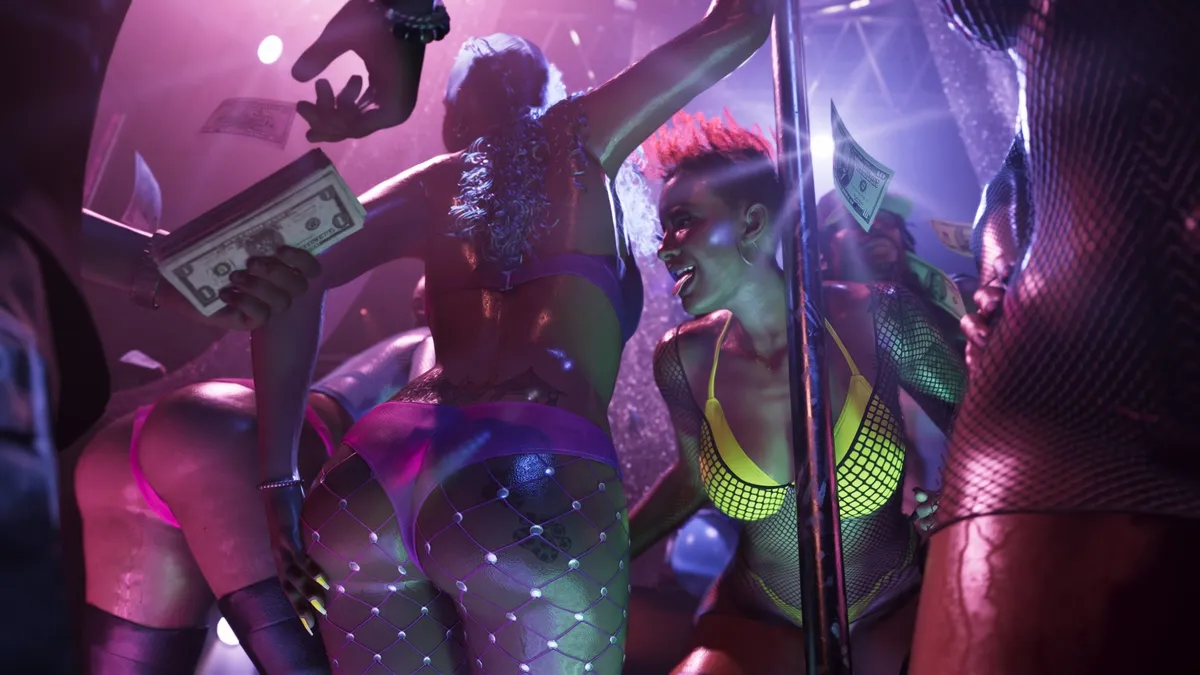
And here we are in 2026. Twenty-four years later, we’re going back to Vice City. But this time, Lucia takes the wheel. Not an Italian-American mobster fresh out of prison, but a young Latin American woman in modern-day Florida. The contrast is fascinating. Same city, same tropical vibe, same criminal energy — but an entirely different world.
GTA 6 is Vice City’s spiritual heir, not its sequel. Rockstar isn’t going to redo 2002. They’re going to take what made the original magical — the atmosphere, the music, the overflowing personality of the place — and inject it into a 2026 game.
The question isn’t whether GTA 6 will live up to Vice City. A 2002 PS2 game can’t be compared to a 2026 PS5 game. The real question is: when we boot up GTA 6, will we feel the same thing that 14-year-old kid felt in front of his CRT TV in October 2002? That rush. That sense that the world of gaming just shifted on its axis.
I hope so. From the bottom of my heart, I hope so.
This article is a tribute to the original GTA Vice City (2002). Historical information is based on public sources and personal memories from our editorial team.