Why Rockstar Takes So Long Between Games (And Why It's Worth It)
The Longest Wait in Gaming
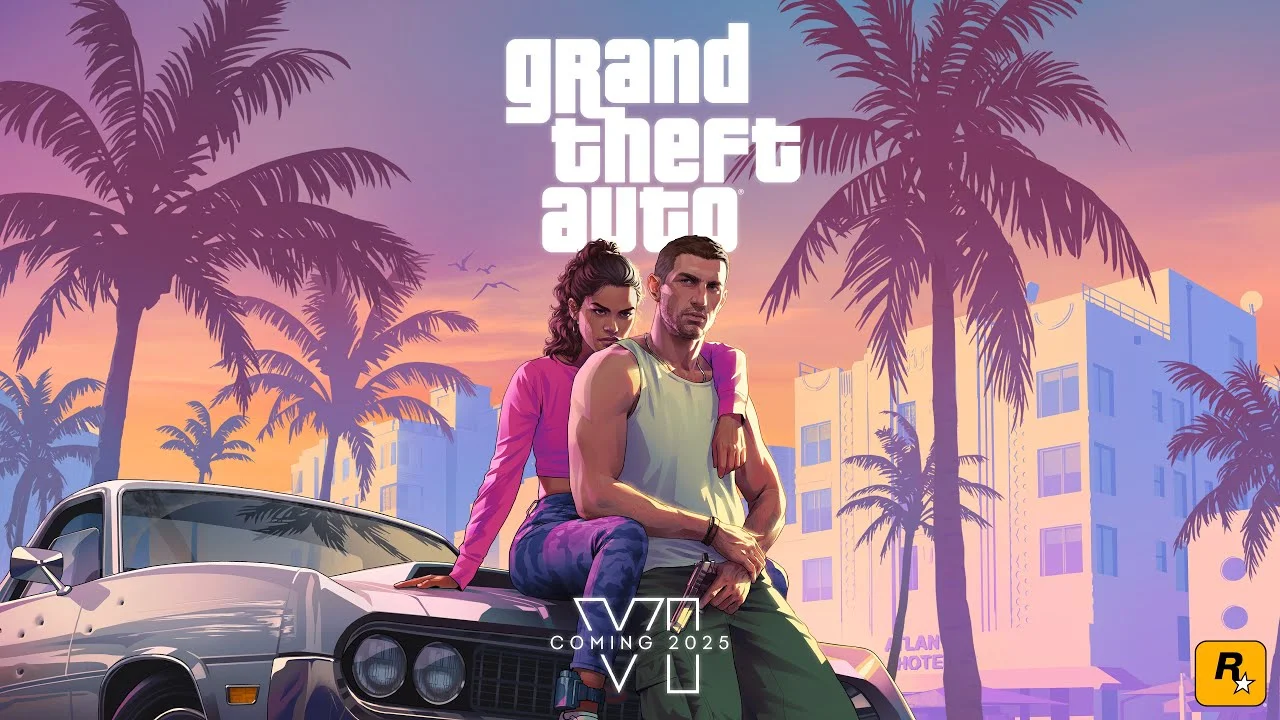
Thirteen years. That’s the gap between GTA V (September 2013) and GTA 6 (November 2026). To put that in perspective: when GTA V launched, the PS4 hadn’t even released yet. Barack Obama was in his first term. Streaming was in its infancy. An entire generation of gamers has grown up knowing only GTA V and GTA Online.
So why does Rockstar take so absurdly long between releases? The answer is more complicated — and more interesting — than “they’re just slow.” It involves money, ambition, corporate strategy, cultural shifts, and a studio that genuinely operates like no other in the industry.
The GTA Online Factor
Let’s start with the most obvious reason: GTA Online prints money. Literal billions of dollars in microtransaction revenue have flowed into Rockstar and Take-Two since 2013. When your existing product generates that kind of income, the urgency to release a new game evaporates.
Think about it from a business perspective. Developing GTA 6 costs hundreds of millions of dollars and carries enormous risk. GTA Online generates revenue with relatively low incremental costs — new content updates, server maintenance, seasonal events. Why rush to replace a money machine when you can keep it running while building the next one?
This isn’t laziness. It’s strategy. GTA Online’s sustained revenue gave Rockstar something invaluable: time. Time to iterate on GTA 6’s design. Time to rebuild their engine. Time to hire, train, and organize a development team capable of building something truly next-gen. In an industry obsessed with annual releases and quarterly earnings, Rockstar used GTA Online’s revenue to buy the one resource most studios never have enough of.
The Scope Problem
Every GTA game has been exponentially more ambitious than the last. GTA III was groundbreaking for its open world. San Andreas expanded it to three cities. GTA V added three playable protagonists and a living online world. Each leap required more people, more time, and more money.
GTA 6 appears to be taking another massive step forward. The trailers show:
- Photorealistic graphics with advanced lighting and weather systems
- Dense urban environments with thousands of reactive NPCs
- A map that spans an entire state with diverse biomes and regions
- Dual protagonists with a relationship-driven narrative
- Next-gen AI systems for NPC behavior and world simulation
Building all of this to Rockstar’s standards — because they do have standards, brutally high ones — takes time. A lot of time. You can’t crunch your way to photorealism. You can’t shortcut a living world. Every tree, every building, every NPC conversation, every weather transition needs to meet a bar that most studios wouldn’t even attempt.
The RDR2 Detour
Between GTA V and GTA 6, Rockstar released Red Dead Redemption 2 in October 2018. That game alone required approximately 8 years of development and involved virtually every Rockstar studio worldwide. It was, by many accounts, one of the most labor-intensive game development projects in history.
RDR2 didn’t just eat into GTA 6’s timeline — it consumed it. Many of the same developers, designers, and technical artists who would eventually work on GTA 6 spent the better part of a decade building the Old West. Only after RDR2 shipped could the full weight of Rockstar’s resources pivot to GTA 6.
But here’s the thing: RDR2 also served as a proving ground. The technology, the AI systems, the animation pipeline, the narrative design tools — everything Rockstar built for Red Dead is now the foundation of GTA 6. The detour wasn’t wasted time. It was research and development disguised as a game release.
The Culture Shift
There’s another factor that rarely gets discussed: Rockstar changed as a company. In 2018, reports emerged about extreme crunch culture at the studio — 100-hour work weeks, burnout, and a toxic development environment. The backlash was significant, and Rockstar publicly committed to changing its work culture.
More sustainable development practices mean longer timelines. If you’re not grinding developers into dust with mandatory overtime, features take longer to build. That’s not a bad thing — it’s arguably the most important reason the wait has been so long, and it should be applauded even by the most impatient fans.
A healthier studio produces better work. Period. If GTA 6 is even half as good as the trailers suggest, the improved work culture will have played a significant role.
Historical Context
Let’s look at Rockstar’s release cadence over the years:
| Game | Year | Gap from Previous |
|---|---|---|
| GTA III | 2001 | — |
| GTA: Vice City | 2002 | 1 year |
| GTA: San Andreas | 2004 | 2 years |
| GTA IV | 2008 | 4 years |
| GTA V | 2013 | 5 years |
| RDR2 | 2018 | 5 years (from GTA V) |
| GTA 6 | 2026 | 8 years (from RDR2) |
The pattern is clear: gaps are growing, and they’re growing because each game is exponentially more complex than the last. The days of annual GTA releases are long gone, and they’re never coming back.
Is It Worth the Wait?
This is the real question, and history gives us a definitive answer: yes.
Every time Rockstar has taken longer than expected, the result has been a generation-defining game. GTA IV was worth the four-year wait from San Andreas. GTA V was worth the five-year wait from GTA IV. RDR2 was worth the eight-year wait from the original Red Dead Redemption.
Rockstar doesn’t do good enough. They don’t ship “pretty solid for a first try.” They ship games that redefine what the medium is capable of, and that kind of ambition requires time that other publishers simply won’t invest.
What’s Confirmed
- GTA 6 has been in development since at least 2014, with full production ramping up after RDR2 shipped
- Rockstar’s work culture has changed — More sustainable practices, less extreme crunch
- GTA Online’s revenue funded an extended development timeline
- RDR2’s technology serves as GTA 6’s technical foundation
What’s Still Speculation
- The exact total development cost — Estimates range from $500 million to over $1 billion
- The full size of the development team — Likely 2,000+ people across multiple studios
- Whether Rockstar will maintain this pace going forward — Will the gap shrink for the next game?
The Bottom Line
Rockstar takes so long because they can afford to, because they demand to, and because the results justify it every single time. In a gaming industry increasingly defined by rushed launches, broken promises, and day-one patches, Rockstar’s refusal to ship before they’re ready is practically radical.
Is the thirteen-year wait frustrating? Of course. But when you boot up GTA 6 on November 19, 2026, and that Vice City skyline stretches out in front of you for the first time, you won’t be thinking about how long it took. You’ll be thinking about how it was worth every single day.