GTA 6 and Intellectual Property: Legal Action and Open Conflicts
When GTA 6’s Intellectual Property Becomes a Battleground
Since the second trailer released on May 6, 2025, public, media, and content creator attention toward GTA 6 has only intensified. That surge in interest has a poorly documented side effect: tensions around the game’s intellectual property are hardening, taking two distinct forms. On one side, legal action against a fan for publishing AI-generated images presented as official material. On the other, a public feud between a Rockstar employee and a Bloomberg journalist.
Neither case is trivial. Both signal that the information ecosystem around GTA 6 is under pressure, less than seven months before the confirmed release date of November 19, 2026.
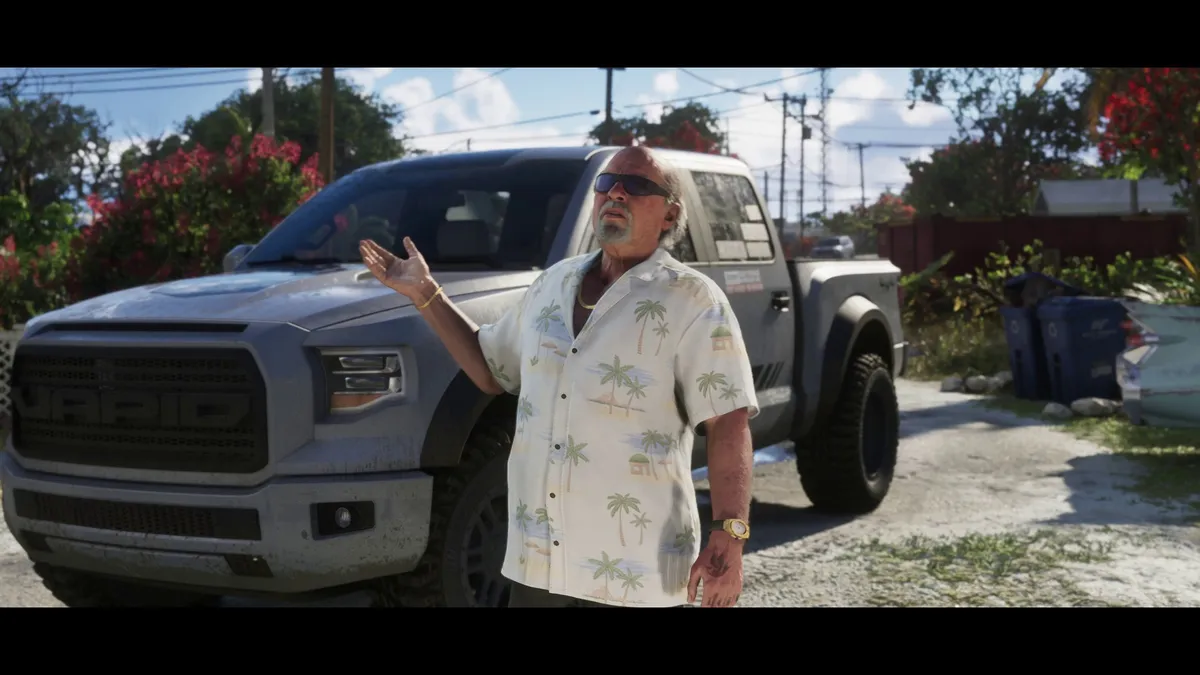 Official image from GTA 6 Trailer 2 (May 2025)
The Fake AI Images Case: A Potential Legal Precedent
According to reporting by The News International and other specialized outlets, a fan reportedly faced legal action after publishing AI-generated visuals that were implicitly or explicitly presented as authentic GTA 6 material. The precise details of the proceedings (jurisdiction, potential damages, outcome) are not yet publicly confirmed, and this information should be treated with appropriate caution.
What is documented, however, is the broader legal context in which this type of case sits. Rockstar Games, a subsidiary of Take-Two Interactive, has a well-established track record of aggressive intellectual property enforcement. The company previously obtained injunctions against sites that republished footage from the massive September 2022 leak, which exposed more than 90 in-development gameplay videos. That precedent signals a clear position: Take-Two views any unauthorized use of visuals associated with its brands, even partially fictional ones, as potentially actionable.
AI generation complicates matters further. Producing a convincing image of a GTA 6 character or environment no longer requires advanced technical skills, but the result can mislead large audiences. Whether an AI-generated image, not derived from protected material but imitating a recognizable style, falls under trademark law, copyright, or unfair competition is still being debated in most jurisdictions. This case may contribute to setting a precedent, or at minimum serve as a warning to content creators about real legal risks.
The Rockstar Artist and the Bloomberg Journalist: A Conflict Over Information Rights
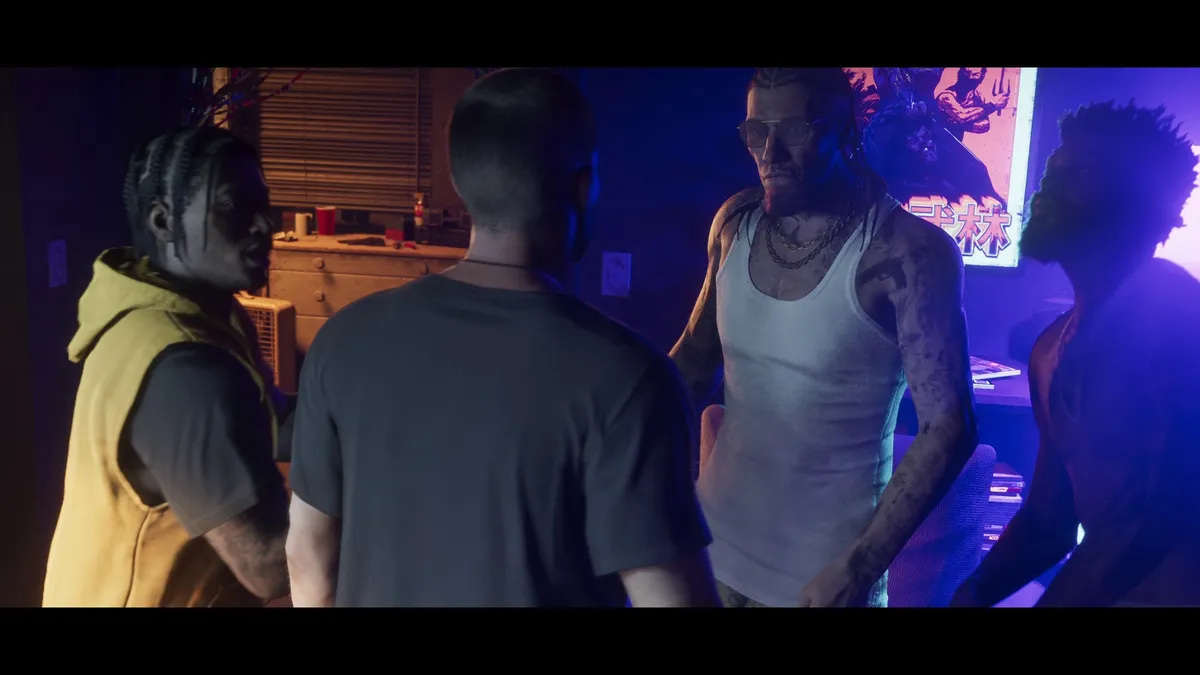 Vice City as seen in the official GTA 6 Trailer 2
The second tension is of a different nature. According to Notebookcheck, an artist employed at Rockstar Games publicly confronted Bloomberg journalist Jason Schreier in connection with the early disclosure of the release date of GTA 6’s first trailer (December 2023).
Schreier had indeed reported the trailer’s release window before Rockstar’s official announcement, a practice common in investigative games journalism but one that generates mixed reactions within studios affected by it. The Rockstar artist, whose exact role in GTA 6’s production pipeline cannot be independently verified at this stage, reportedly expressed public frustration, arguing that leaks of this kind undermine the work of creative teams.
This type of conflict exposes a structural tension between the games industry and the specialized press. For journalists, accessing internal sources and publishing verified information ahead of official announcements is a legitimate exercise of their profession. For some developers, these early revelations bypass carefully planned communication strategies and can create internal friction, particularly when the disclosed information is sensitive or incomplete.
In the case of GTA 6, where Rockstar maintains unusually tight control over its communication calendar (two trailers in two years, no press conferences, no announced date for a potential third trailer), frustration over leaks is understandable. That does not make investigative journalism illegitimate.
What These Two Cases Reveal About GTA 6 Right Now
These tensions do not exist in isolation. They emerge at a specific moment in the communication cycle of a highly anticipated game: the window between the confirmation of a release date and the release itself, when demand for information far exceeds official supply. It is in this space that fake AI content proliferates, rumors get amplified, and conflicts arise over who has the right to say what, when, and through which channel.
Rockstar has not publicly commented on either the AI images case or the feud between its artist and the Bloomberg journalist. Both situations therefore remain ongoing, with the caveat that available information is still partial.
What is not in doubt: as November 2026 draws closer, the pressure surrounding GTA 6 will not ease.