Rockstar Games: The History of the Studio That Changed Gaming Forever
The Studio That Never Does Anything Halfway
There are video game studios. And then there’s Rockstar Games. Confusing the two is like confusing a go-kart with a Formula 1 car. On paper, they do the same thing. In practice, they’re not even in the same league.
For over 25 years, Rockstar hasn’t just released games. Rockstar releases cultural events: moments where the entire industry holds its breath, records fall, and mainstream media covers gaming in ways that go beyond the usual criticism. Here’s the story of a studio unlike any other.
The Origins: DMA Design and the Birth of GTA
It all starts in Scotland, in Dundee. In 1987, David Jones founds DMA Design, a small independent studio. They make decent games, nothing groundbreaking. Then in 1997, they release a top-down game where you steal cars and run from the police.
Grand Theft Auto. First version. Top-down view. Basic graphics. And already that freedom of movement that would become the franchise’s calling card. The game causes outrage and sells massively. The formula is found.
In 1998, brothers Sam and Dan Houser, two Brits obsessed with American culture, enter the picture through Take-Two Interactive. Sam becomes president of what will become Rockstar Games. Dan becomes the creative director and lead writer. The duo that will change everything is in place.
2001: GTA III and the Open-World Big Bang
October 2001. The PS2 is in living rooms everywhere. Rockstar drops a bomb: GTA III, the first 3D GTA. Liberty City as an open world. Total freedom to roam, take on missions, or simply unleash chaos.
The game redefines what a video game can be. Before GTA III, the open world was a vague concept. After GTA III, it became the dominant genre in the industry. Ubisoft, Activision, EA: everyone spent the next twenty years trying to replicate the formula. None of them did it as well.
The sequels arrived at a blistering pace:
- Vice City (2002): the 1980s Miami vibe, the legendary soundtrack, Tommy Vercetti
- San Andreas (2004): three cities, a massive territory, CJ and West Coast culture. The most ambitious game on the PS2.
In three years, Rockstar released three games that still rank among the greatest ever made. That level of output, at that quality, is almost absurd.
2008-2013: Maturity and the Turning Point
GTA IV: When Rockstar Grows Up
In 2008, GTA IV arrives with a radically shifted tone. Gone is the cartoonish madness of San Andreas. Niko Bellic, a Serbian immigrant arriving in Liberty City, carries his dreams and his demons through a darker, more realistic, more cinematic game. Some love it. Others miss the freewheeling fun of earlier entries. Everyone recognizes the ambition.
Red Dead Redemption: A Different Kind of Landmark
In 2010, Rockstar proves they’re not confined to the GTA universe. Red Dead Redemption transplants the open-world formula into the American Wild West, and the result is magnificent. John Marston enters the pantheon of gaming’s greatest characters.
GTA V: The Undisputed King
And then there’s GTA V. September 2013. Three playable protagonists, a massive map, an online mode that becomes a worldwide phenomenon. The game generates one billion dollars in three days, an all-time record. It launched on PS3, PS4, PS5, Xbox 360, Xbox One, Xbox Series, and PC. Over 200 million copies sold. By any measure, the most profitable entertainment product in human history, across all media.

The Dark Side: Crunch and Controversies
You can’t talk about Rockstar without addressing the uncomfortable parts. In 2018, Dan Houser stated in an interview that the team worked 100-hour weeks during Red Dead Redemption 2’s development. The statement landed hard.
Employees came forward anonymously. The picture wasn’t pretty: constant pressure, unpaid overtime, exhaustion. Crunch at Rockstar wasn’t an accident. It was a working method, and its cost was paid by the developers.
Since those revelations, Rockstar claims to have changed. Recent accounts reported by Jason Schreier at Bloomberg suggest a real but imperfect improvement in working conditions. The studio reportedly scaled back GTA 6’s initial ambition to avoid a crunch as brutal as RDR2’s. Whether that shift is durable remains an open question.
The other rupture is the departure of Dan Houser in March 2020. The co-founder, the creative force, the writer behind GTA IV, GTA V, and Red Dead Redemption 2. His exit sent shockwaves through the community. GTA 6 will be Rockstar’s first major release without him.
Why Rockstar Takes So Long
Twelve years between GTA V and GTA 6. The gap is worth examining.
First, Rockstar doesn’t ship a game until it matches what they want. No commercial compromise, no rushed release to satisfy shareholders. GTA V cost roughly $265 million to develop. Red Dead Redemption 2 cost more. GTA 6 is likely the most expensive game ever made, involving thousands of developers across multiple studios worldwide.
Second, GTA Online has generated hundreds of millions of dollars annually for over a decade. That revenue removed any financial urgency to ship something new.
Third, scope simply exploded. What Rockstar is building for GTA 6 has no real precedent in the industry.
GTA 6: The Legacy Continues
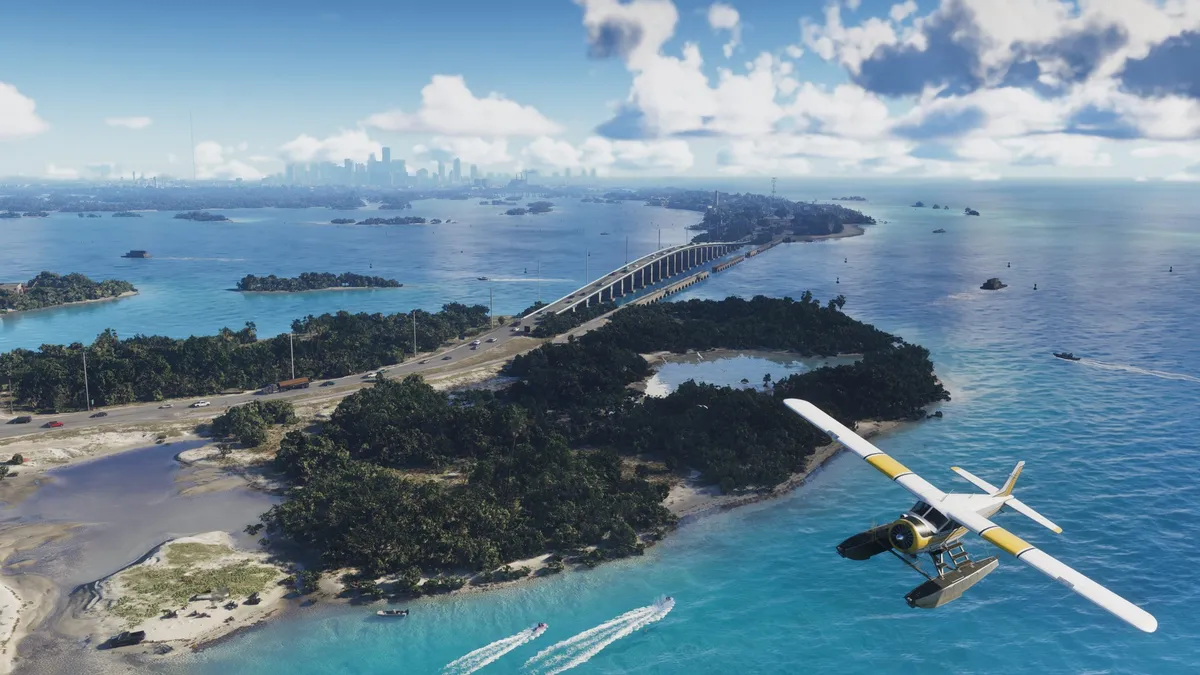
GTA 6 arrives on November 19, 2026. Every GTA release has pushed the boundaries of what was technically and narratively possible. Every release has been a cultural event. The weight of that history sits squarely on this one.
Rockstar’s track record suggests they understand that pressure. They take their time, they absorb criticism, and they have consistently delivered games that define entire generations.
What’s Confirmed
- Rockstar Games was founded in 1998 by Sam and Dan Houser
- GTA V has sold over 200 million copies
- Dan Houser left the studio in March 2020
- GTA 6 launches November 19, 2026 on PS5 and Xbox Series X|S
What’s Still Speculation
- GTA 6’s exact budget (estimated between $1 and $2 billion)
- The real impact of Dan Houser’s departure on the game’s quality
- Whether working conditions have genuinely improved
Rockstar doesn’t talk much. It delivers. And when it delivers, the numbers follow.