Fall 2026 release calendar: how GTA 6 emptied November and overcrowded September
Two. According to IGN, that is how many games across the entire industry are keeping a November 2026 release date against GTA 6. Everyone else has abandoned what is historically the most profitable month of the year and crowded into September and October instead, a pile-up Kotaku describes as a scheduled “bloodbath”. Five months before November 19, the fall calendar already reads like a measurement of the weight Rockstar’s title carries.
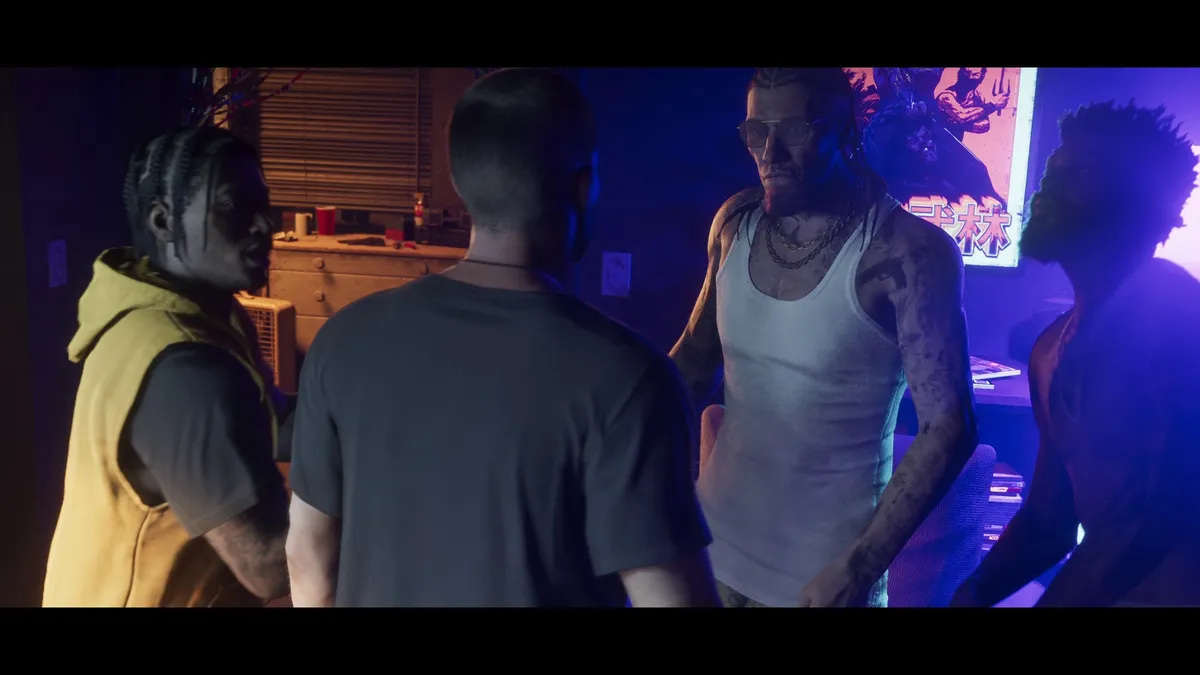
 Vice City, Leonida. The setting for a launch that is redrawing the calendar of an entire industry.
Fleeing to September and October created its own problem
The publishers’ logic is understandable: a game launching in the weeks around GTA 6 risks reduced press coverage, smothered initial sales and marginal visibility on streaming platforms. Storefront promotional space in November will be almost entirely captured by Rockstar.
The mass retreat carries a cost many seem to have underestimated, though. By pulling their releases forward into September and October, dozens of titles now compete for a window that was never sized to absorb that many launches: diluted marketing budgets, fragmented press attention, head-to-head fights between games that would never have crossed paths otherwise. In fleeing Rockstar, they end up cannibalizing each other.
The documented examples keep piling up. Xbox pushed Fable to February 2027, a delay Eurogamer attributed to “worries” tied to GTA 6’s release rather than the state of the game. Tomb Raider: Legacy of Atlantis, once planned for fall 2026, now targets February 10, 2027. Sony, for its part, opened its May State of Play with Marvel’s Wolverine dated September 15, exactly two months before GTA 6: the fallback slot par excellence.
The maneuver does not even buy full protection. GTA 6’s impact zone does not start on November 19: it opens several weeks earlier, as soon as media coverage shifts into pre-launch mode, and extends well past release while players sink their first dozens of hours into the game. A title shipping in late October will see its second and third weeks collide with the pre-order surge. The only genuinely safe windows are the summer and early 2027.
GTA V in 2013, the only comparable precedent
| Indicator | GTA V (Sept. 2013) | GTA 6 (Nov. 2026) |
|---|---|---|
| First-week sales | ~11.21 million units | Analyst projections: 20-25M |
| Revenue in the first 3 days | $1 billion | Projections: $1.5 to 2 billion |
| Publishers that moved a release | A few isolated cases | Documented industry-wide pattern |
| Commercial dead zone | ~3 weeks | ~6 weeks estimated |
| Platforms | PS3, Xbox 360 (end of cycle) | PS5, Xbox Series X|S (mature install base) |
The gap between those two columns is not just Rockstar’s reputation at work. In 2013, GTA V shipped on a console generation at the end of its life, two months before the PS4. GTA 6 arrives on a PS5 and Xbox Series install base that has matured for six years, in front of an audience that has waited thirteen years (versus five between GTA IV and GTA V), with an Online component expected at launch where GTA Online took three weeks to arrive. Each factor amplifies the 2013 precedent rather than merely repeating it. That mechanism, visible in the projections, is what pushes commercial planning departments to move their schedules without waiting for a single real sales figure.
 Lucia Caminos, co-protagonist of GTA 6. The May 6, 2025 trailer further amplified anticipation around the title.
Staying in November: two deliberate bets
The two titles holding their date deserve better than condescension. Their bet rests on the inverse reasoning: the attention concentrated on GTA 6 frees up niches. Players who are not Rockstar’s audience (shorter experiences, different genres, younger players) will be available and short on alternatives. The weeks after GTA V’s 2013 launch demonstrated it: several niche games posted solid numbers precisely because they were not chasing the same player. Remedy’s CEO Tero Virtala takes that reasoning one step further and predicts a golden age: a launch of this magnitude drives console sales and pulls players back into the ecosystem, to the benefit of studios that do not box in the same budget category.
The most striking illustration comes from Atari and Digital Eclipse. Barbie Rewind, a compilation of 16 Barbie games released between 1991 and 2007, is scheduled for November 12, 2026, one week before GTA 6. GameSpot dubbed the move gaming’s “Barbenheimer”. The two audiences have zero overlap, which makes cohabitation rational. For other studios, fiscal or contractual constraints can also make a delay more expensive than head-on competition: pushing a release by six weeks means renegotiating marketing plans, retail agreements, sometimes financing terms.
The right question for a publisher is therefore not “can we beat GTA 6?” but “are we talking to the same audience at the same moment?”.
Skipping Summer Game Fest, an extension of the same dominance
Summer Game Fest 2026 took place without any Rockstar presence: no trailer 3, no panel, no gameplay segment. Polygon listed GTA 6 among the edition’s most discussed absences, alongside projects whose releases remain distant. The difference is that GTA 6 ships in five months.
The absence signals no trouble. Rockstar handled GTA V’s communication as a closed circuit, never attending the big industry shows, and is applying the same doctrine here: every announcement published on its own channels works as a self-contained event, with its own press cycle and its own social wave. Joining a shared showcase would dilute attention rather than amplify it. Few publishers can afford that luxury, and the deserted November calendar is exactly what that luxury measures.
GTA 6’s sales do not exist yet. Their anticipation has already moved dozens of dates, redirected marketing budgets and emptied the most profitable month of the year. The dominance of November 19, 2026 was settled long ago in the spreadsheets of commercial planning departments: all that remains is to watch it play out.
Pre-Order Tracker
Live status by retailer (Rockstar Store, PSN, Xbox, Best Buy, Amazon...) with Rockstar precedents to calibrate the expected window.